Keynote Speakers
Meet our distinguished keynote speakers for EBISION 2026 who will share their expertise and insights on cutting-edge topics.
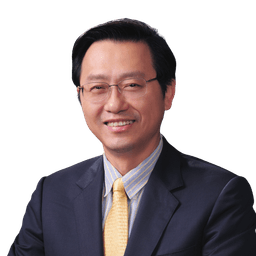
Tei-Wei Kuo
Delta Electronics, Taiwan
Empowering AI to Drive the Next Era of Intelligent Industry
Abstract
As the world undergoes a paradigm shift from the digital era to the age of intelligent systems, Artificial Intelligence is evolving from tools in natural language processing into a fundamental driver of innovation. Empowering AI at scale requires a robust foundation spanning energy infrastructure, advanced computing, edge intelligence, and domain expertise—from the power grid that fuels AI systems to the chips that enable intelligent decision-making. This keynote explores how these advances are transforming sustainable energy systems, intelligent automation, and Edge AI, highlighting the technologies and opportunities shaping the next era of intelligent industry.
Biography
Dr. Kuo received his bachelor and Ph.D. degrees in Computer Science from National Taiwan University and University of Texas at Austin in 1986 and 1994, respectively. He is CTO of Delta Electronics, which is a global leader in power and thermal solutions with annual revenue approximately USD 18 billions in 2025, and was a Distinguished Professor in Computer Science and Information Engineering and an Interim President of National Taiwan University (2017.10-2019.01). His research interest includes flash-memory storage systems, non-volatile memory systems, and embedded systems. Dr. Kuo is Fellow of ACM, IEEE, and US National Academy of Inventors, and Chair of ACM SIGAPP. He received numerous recognitions, including Academic Award of Taiwan Ministry of Education, Humboldt Research Award, Distinguished Research Award of Taiwan National Science and Technology Council, Outstanding Technical Achievement and Leadership Award from IEEE TCRTS, and many best paper awards, including those from ACM/IEEE CODES 2019, 2022, 2024. He is founding EiC of ACM Transactions on Cyber-Physical Systems (2015-2021) and General Chair of ESWEEK (2025).

Nicola Dragoni
Technical University of Denmark, Denmark
From Logs to Cyber Threat Intelligence: Mining the Behavior of Cyber Threats
Abstract
As digital systems continue to grow in scale, heterogeneity, and interconnectedness, cybersecurity has become a fundamentally dynamic challenge. Modern systems, such as IoT generate vast amounts of event data in the form of logs, yet transforming this data into actionable insight about system behavior and cyber threats remains a major obstacle. This keynote introduces the idea of using process mining as a data-driven approach to understanding and governing digital behavior, bridging the gap between raw security logs and meaningful behavioral models. After introducing the foundations of process mining, the keynote explores how process mining techniques can be leveraged in cybersecurity. In particular, we show how process mining enables the formal modeling of both benign system behavior and adversarial activity, allowing to reason about attacks as structured processes unfolding over time. Such models provide a basis for detecting deviations, identifying both known and previously unseen attack patterns, and systematically analyzing attacker strategies. Drawing on real-world security data, the keynote illustrates how process mining can be applied in practice to model, detect, simulate, analyze, and reason about cyber attacks.
Biography
Nicola Dragoni is Professor of Secure Pervasive Computing at Technical University of Denmark (DTU), within DTU Compute - Department of Applied Mathematics and Computer Science - where he also serves as Deputy Director and as Head of the Cybersecurity Engineering section. Nicola Dragoni received an M.Sc. (cum laude) and a Ph.D. in Computer Science from the University of Bologna, Italy. His main research activities focus on cybersecurity in pervasive computing, with latest focus on cybersecurity for the Internet of Things and cyber defence. Nicola Dragoni has authored or co-authored more than 170 peer-reviewed publications in leading international journals and conference proceedings. He has edited 3 journal special issues and 1 book. Nicola Dragoni has been actively involved in numerous national and international research projects, securing funding for multiple Ph.D. and postdoctoral researchers. Nicola Dragoni is also a widely recognised speaker and has delivered invited talks at major international academic conferences and industry events.
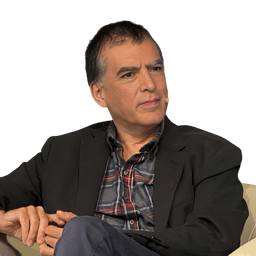
Antonio Skarmeta
University of Murcia, Spain
Data Space and Secure Data sharing in the context of Digital Transformation
Abstract
Data Space has emerged in recent years as new paradigm, with the aim of enabling secure data sharing across economic sectors, moving from a centralized approach to a decentralized and federated data ecosystem. Data Spaces are briefly defined as ecosystems where organizations are able to securely share data coming from different sources, ensuring data sovereignty, supported by a governance model. Data Spaces transform the way that companies and organizations share and manage data and this may suppose a change in the architectural paradigm for the next generation of businesses and stakeholders interactions in different sectors. In this talk we will give a presentation of the Data Spaces approach, how projects like TITAN and NEREIDAS as taking the approach to define different scenario of secure data sharing and confidential computing for their data ecosystems.
Biography
Dr. Antonio Skarmeta received the M.S. degree in Computer Science from the University of Granada and B.S. (Hons.) and the Ph.D. degrees in Computer Science from the University of Murcia, Spain. Since 2009 he is Full Professor at the same department and University. Antonio F. Skarmeta has worked on different research projects in the national and international area in the networking, security and IoT and 5G area. His main interest is in the integration of 5G, security services, identity, IoT and Smart Cities. He has been the head of the research group ANTS since its creation on 1995. Currently, he coordinates the EU project TITAN in the area of Data Space and Data Sharing, and also the Spanish Demonstration Center for Data Spaces in Marine Science, NEREIDAS. He has published over 200 international papers and is a member of several program committees. He has also participated in several standardization fora like IETF, ISO and ETSI and being nominated as IPv6 Forum Fellow. He is also CTO of the spinoff company Odin Solution S.L. (OdinS) in the area of IoT and Smart Infrastructure.